


For Australian trade businesses
hipages leads vs your own website
Shared leads fill gaps, especially early on. Your own engine, a website and Google presence you own, wins work that's yours alone. Here's the honest comparison, on hipages' own numbers.
Where hipages genuinely works
Fair's fair: it does what it says. It solves a real problem, which is quoting activity this week, with nothing to build first.
- jobs posted every month
- 100,000+
- Australian tradie members
- 33,000
- a job posted every
- 25 sec
hipages Group Quick Facts, July 2026.
-
Fast to start
Profile up, leads coming in within days. No build time, no setup project, nothing to learn.
-
You pay for activity
Your plan loads credits each month and accepting a lead spends them. No commission on the job value, and you can see what every credit did.
-
The structure is built for you
A business profile with reviews, plus quoting, invoicing and scheduling in the app. If you're starting from nothing, that's a real head start.
How do hipages leads actually work?
-
You subscribe
$139 to $649 a month plus GST. Each plan loads your account with a monthly batch of credits.
-
A homeowner posts a job
Matched tradies get notified. Accepting the lead spends credits; the price varies by trade, location, job size and demand.
-
Up to 3 tradies accept
Each pays for the same homeowner's details. After three, a waitlist forms.
-
You quote against two others
Win or lose the job, the credits are spent. Unused credits expire over time.
What kind of jobs come through?
Plenty of tradies win real work on it, and it varies by category and suburb. But ask around, and the same stories come up over and over:
-
"Bloke wanted his $900 oven installed, and the old one taken away, for $450."
The lowball
-
"Booked a tap job priced for a pensioner's budget. Turned up to a marble entrance."
The budget that isn't
-
"You'd be better off going fishing than putting in a tap mixer for fifty bucks."
The race to the bottom
Patterns from Australian tradie Facebook groups, anonymised. Not every job, but every tradie recognises them.
Add the quote collectors, the leads that go nowhere, and the invoices you end up chasing after winning on price, and the credits burn faster than the calendar fills.
Why it skews that way
- Homeowners post a job in a couple of minutes, with nothing riding on it. There's no filter on how serious it is.
- Every lead invites up to three quotes, and when three strangers price the same job, cheapest is the easiest way to pick.
- The homeowner hasn't seen your reviews, your photos or your work. You're one of three names on a screen.
None of that is a knock on hipages. It's what an open marketplace naturally optimises for. It's also the opposite of what your own engine attracts: someone who searched, found you, read your reviews and rang. That client arrives already leaning your way, not comparing three prices.
What does a shared lead really cost?
Whatever plan you're on, the subscription buys chances to quote, not jobs:
Three businesses can pay for the same lead. Quote well and win one in three, and a third of your spend books work; the rest bought conversations with homeowners who picked someone else.
Real jobs come in for it, which is why tradies keep paying. But nothing stays behind: the profile, the reviews and the visibility all live on the platform. There's a name for that: lead renting. Not a con, just a deal where you never stop paying for the same thing.
Owning the engine runs the other way
Around 22,200 Australians search "plumber near me" every month, and a "plumber near me" click runs about $19.82 at market rates (Semrush AU, August 2026). On your own website, those clicks land with your number on them and nobody else quoting.

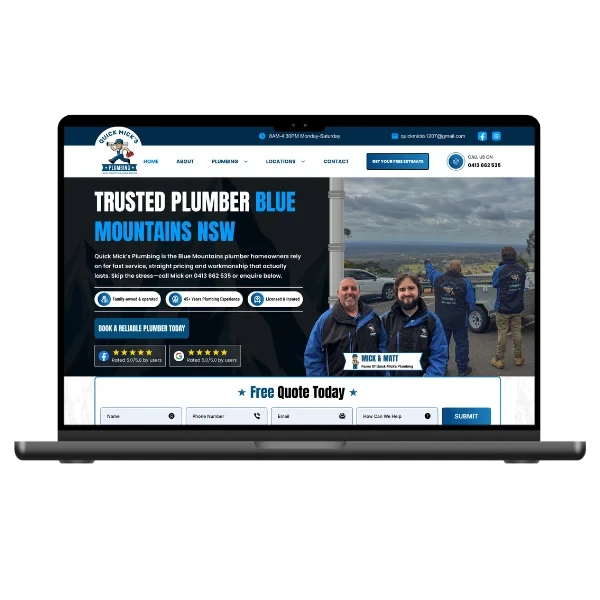
Renting leads vs owning the engine
| Comparison point | Renting leads | Owning the engine |
|---|---|---|
| Where the enquiry goes | To you and up to two others. Three businesses can accept each lead, then a waitlist forms. | Straight to your phone. Nobody else sees it. |
| Who's on the other end | A poster collecting up to three quotes, usually price-first. | Someone who searched, read your reviews and chose to call you. |
| What you pay for | Each lead you take, win or lose the job. | An asset you keep: the website, the rankings, the Google listing. |
| When you stop paying | The leads stop with the subscription. | The website and rankings keep working. Rankings compound instead of resetting. |
| Where reviews build up | On your platform profile. | On your own Google listing, which ranks you in the map results. |
| Whose brand grows | The platform gets the search traffic and the recognition. | Yours. People start searching your business by name. |
Where do tradies get job leads?
Every job lead comes from one of three places: platforms that sell shared enquiries, word of mouth, or channels you own outright. None of them is wrong. They differ on what a lead costs, how fast the first one lands, and who keeps the client relationship afterwards.
| Lead source | What it costs | Who keeps the client | Speed to first lead |
|---|---|---|---|
| hipages | $139 to $649 a month plus GST, spent as credits per lead | The platform (your profile and reviews live there) | Days |
| Airtasker | No subscription; 12.5% to 20% of each completed task plus GST | The platform (your profile and reviews live there) | Days |
| Word of mouth and referrals | Free | You | Unpredictable |
| Your own website and Google listing | One build, then no per-lead charge | You | Months to rank, then steady |
| Ads into a website you own | Pay per click or per lead | You | Days |
hipages membership pricing and Airtasker tasker-tier fees, both retrieved 20 July 2026. Links at the end of this page.
The platform route trades money for speed. How the credits, contracts and shared leads play out is covered above; for fee-by-fee detail, our hipages review and Airtasker review run on the platforms' own published numbers. If you're looking for Oneflare, it was retired on 30 June 2026 and now redirects to Airtasker.
Word of mouth is still the best lead in the trade: the client already trusts you, rarely haggles, and costs you nothing. Referrals just arrive at the pace of jobs finished, and you can't ring up and order three more when the week goes quiet.
The owned route is the slow one, and the only one where everything keeps working after the spending stops; the shared-lead maths above shows the difference. The map reads the same for every trade: lead generation for plumbers runs exactly like lead generation for electricians, and only the going rate per credit and per click moves with your trade and postcode.
Fair disclosure: KINGTRADIE doesn't sell leads. Websites and Google are the rows we work in, so weigh our take accordingly.
When does each one make sense?
This isn't either-or, and anyone who tells you to cancel everything tomorrow is selling something. Match the tool to where the business is at. If you're costing the owned side, the sourced numbers are in our tradie website cost guide, the engine itself is custom websites for tradies plus Google Ads for tradies, and the whole channel map lives in the digital marketing for tradies guide.
-
Starting out or filling gaps
Keep hipages. It does this job well: quick quoting activity while your name gets around. Just treat it as a bridge, not the destination.
-
Established, after better jobs
This is where owning the engine wins. Your suburbs, the services you want more of, and clients who chose you rather than the fastest quote.
-
Running both
The common path. Keep the platform on while your website and rankings spin up over a few months, then taper the lead spend as your own enquiries take over.
Weighing it up?
The questions tradies ask about lead platforms and going out on their own.
Is hipages worth it for tradies?
For filling gaps in the calendar or getting quoting activity early on, yes, it does its job. The trade-off is that leads are shared, the spend stops working the day you stop paying, and the profile you build belongs to the platform rather than to you.
How much does hipages cost?
Plans run from $139 to $649 a month plus GST, each loading a monthly allowance of credits that you spend accepting leads (hipages pricing page, retrieved 20 July 2026). Subscriptions start on a six-month introductory term and renew on twelve-month terms, and what a lead costs in credits moves with your trade, location, job size and demand.
Can I run hipages and my own website together?
Yes, and plenty of trade businesses do exactly that. A common path is keeping the platform running while your own website and Google presence build up, then winding the lead spend back as your own enquiries take over.
How do I get leads without hipages?
Three channels you own: a website built to rank for your services and suburbs, a well-maintained Google Business Profile collecting reviews, and Google Ads when you want jobs on demand. They take longer to get going than a lead platform, and they compound instead of resetting.
Are lead generation companies worth it for tradies?
Depends what you're buying. Platforms like hipages and Airtasker sell speed: enquiries this week, paid per lead or per job. Marketing companies build channels that end up yours: your website, your Google listing, your ad accounts. Before paying anyone, ask what you still own the day the payments stop. That answer decides which is worth it.
Do hipages reviews help me rank on Google?
They strengthen your hipages profile, and that profile can show up in search results. But reviews on your own Google Business Profile are what move you up the map results for your area, and those stay yours whether or not you keep any subscription.
What does building your own website cost instead?
Anywhere from $21 to $75 a month doing it yourself, up to $15,000 for a premium custom build, depending on who builds it and what it is built to do. We put the full sourced breakdown, including ongoing costs and what to check before paying anyone, in our tradie website cost guide.
Sources
- hipages membership pricing, hipages.com.au, retrieved July 2026
- hipages job leads and credits policy + Business contract, hipages.com.au, retrieved July 2026
- hipages Group Quick Facts, hipagesgroup.com.au, retrieved July 2026
- Airtasker tasker tiers and service fees, support.airtasker.com, retrieved 20 July 2026
- Semrush AU keyword data, July 2026
Facts and figures retrieved July 2026. Platform pricing and mechanics change; check the source pages for current details.
Take your time.
Keep hipages while it's filling the calendar. When you're ready to see what an engine you own looks like for your trade and area, book a call and we'll walk you through it. No obligation.
Book a call