


A 2026 reality check
Is SEO worth it for a small business?
Sometimes. It pays when people already search for the jobs you want and you can wait a few months while rankings build. If the week needs filling now, there are faster spends. Both sides below, with real numbers.
When is SEO worth the money?
SEO is worth it when the demand already exists and you can afford to wait for it. If people in your area search for what you do, every one of those searches lands on somebody's website. The question is only whether it's yours, a competitor's, or a directory charging you for the introduction.
Plumber Near You | Book Online
- Nearby Plumbing
- A Local Plumbing Co
- Metro Plumbers
The demand part is measurable before you spend anything. There are around 22,200 searches for "plumber near me" every month in Australia (Semrush estimate, July 2026). That's one phrase, for one trade. Every trade has its own set of searches, suburb by suburb, and the numbers are checkable in an afternoon.
The boxes worth ticking first:
- Real searches exist for your trade in your area, in numbers worth chasing
- One decent job pays real money, and good clients tend to come back with more
- You serve a local service area, which keeps the contest small enough to win
- You're prepared to leave it running for six months before judging it
When is SEO the wrong spend?
There are three times to skip SEO, and none of them are a failure. They're timing.
- You need work this week. Rankings take months, and ads or a lead platform can have the phone ringing in days.
- Your book is already full.
- The budget only stretches to $99 a month, because that buys something else entirely.
Fast and paid beats slow and owned when the schedule is empty, and there's no shame in running ads first and building rankings once cash flow is steady. The trade-offs between the two are laid out in our guide to SEO vs Google Ads.
The commitment check matters most. SEO pays late: the first months are build, the returns arrive after. If you already know the spend gets cut at the first quiet invoice, keep the money. A half-finished SEO campaign is the most expensive kind.
What does SEO look like when it works?
It looks like new work arriving with no ad bill attached. That's the end state. Getting there is a website and Google listing built properly for one trade in one area, then months of compounding. The clearest example we can show you is a plumber in the Blue Mountains.
~10 new clients a month Quick Mick's Plumbing, Blue Mountains NSW. Ranked page one of Google for around 40 searches and taking roughly 10 new clients a month, with zero ongoing ad spend. Read the case study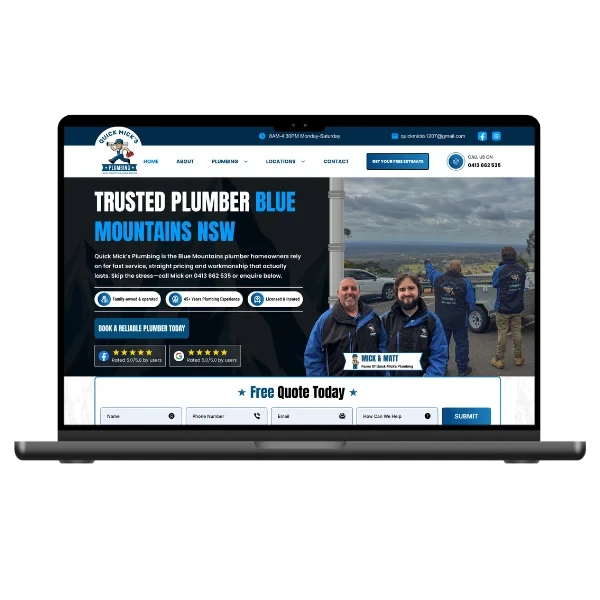
The compounding is the point. A paid click is rented, and the leads stop the day the budget does. A page that ranks keeps answering the same search month after month, and it stays yours whether you keep spending or not.
What does doing SEO actually involve?
For a trade business it's mostly plain work, four jobs repeated for months:
-
Service pages
A page for each service you want to rank for, written for your actual area.
-
Your Google listing
Filled out properly and kept active, the map listing people see when they search nearby.
-
Reviews, steadily
A steady trickle coming in, month after month, not a rush once and then silence.
-
Fast on a phone
A website that loads quickly on mobile, where most of the searches actually happen.
There's no secret handshake with Google to buy, whatever a cold caller tells you. The pages, the listing, the reviews and the speed are the whole game, repeated for months. A provider who can't name exactly which of those they'll be working on is a red flag before any money moves.
How do you know if it's working?
Count enquiries, not rankings. A rankings chart that never turns into the phone ringing is decoration. The numbers that actually matter are the ones you can bank:
- Calls that come from Google
- Enquiry forms from the website
- Jobs booked by people who found you by searching
Ask every new client where they found you and write it down.
Give it a fair window before judging. Quiet at month two is normal. If nothing has moved by month six, start asking hard questions of whoever is running it.
Have them report in enquiries and jobs, in plain English. If the monthly report needs a translator, ask why.
Do we have a horse in this race?
Yes. KINGTRADIE runs local SEO for Australian trade businesses, so we're not a neutral referee on this question. The advice above stands anyway: if your book is full, or you need work this week, or the budget is $99 a month, SEO is the wrong spend, from us or from anyone else.
When the checks do line up, what the month-to-month work looks like is on our SEO for tradies page, and where SEO sits against ads, lead platforms and the rest is in the full guide to digital marketing for tradies. No lock-in contracts, and the website and everything on it stays yours.
The blunt answers.
The questions people actually Google.
How long does SEO take to work?
Plan in months. For a local trade business, expect three to six months before rankings turn into steady enquiries, sometimes longer in competitive areas. Anyone promising page one inside 30 days is selling something other than SEO. The upside of the slow build is that results tend to hold once they arrive.
Is SEO still worth it in 2026?
For a local trade business, yes, provided the demand is real. People still go to Google when a pipe bursts or the switchboard dies, and those searches are counted, so you can check the monthly numbers for your trade and area before spending a dollar. If the searches are there, the case holds.
Is paying for SEO worth it?
It depends entirely on what the money buys. Paying for named work, service pages written for your area, your Google listing managed, reviews built up, is worth it when the demand exists. Paying $99 a month for a mystery report is not, because nobody can do the real work at that price.
Does SEO work for small businesses in Australia?
Yes, and local is where it works best. A small Australian trade business only has to out-rank the other locals in its service area, never the whole country. Quick Mick's Plumbing in the Blue Mountains is a live example: page one of Google and around 10 new clients a month, no ongoing ad spend.
What happens if I stop doing SEO?
Nothing dramatic overnight. Pages that rank keep ranking for a while, and a well-built website holds its ground for months. What stops is the compounding: new pages, fresh reviews and steady improvements end, and competitors who keep working can pass you over time. The asset stays yours. It just stops growing.
Isn't it cheaper to just run Google Ads?
Not over time. Ads rent every visit, and an emergency plumber click runs about A$13 to A$69, the same the day you stop paying as the day you start. You can see what a click costs across the trades. SEO works differently. A page that ranks keeps answering that search for free once it is built, so your cost per enquiry falls the longer it runs. What that ongoing work involves is on our SEO for tradies page.
Where these numbers come from
- Search volumes: Semrush Australia estimates, retrieved July 2026
- Quick Mick's results: our published case study, figures as reported by the client
Figures retrieved July 2026. Search demand shifts by season and suburb, so check current numbers before you commit a budget.
Want the numbers for your area?
Book a call and we'll look up how many people actually search for your trade in your area, then tell you straight whether SEO stacks up. If it does, you'll get a fixed quote. If it doesn't, you'll at least know what the demand looks like where you work.
Book a call